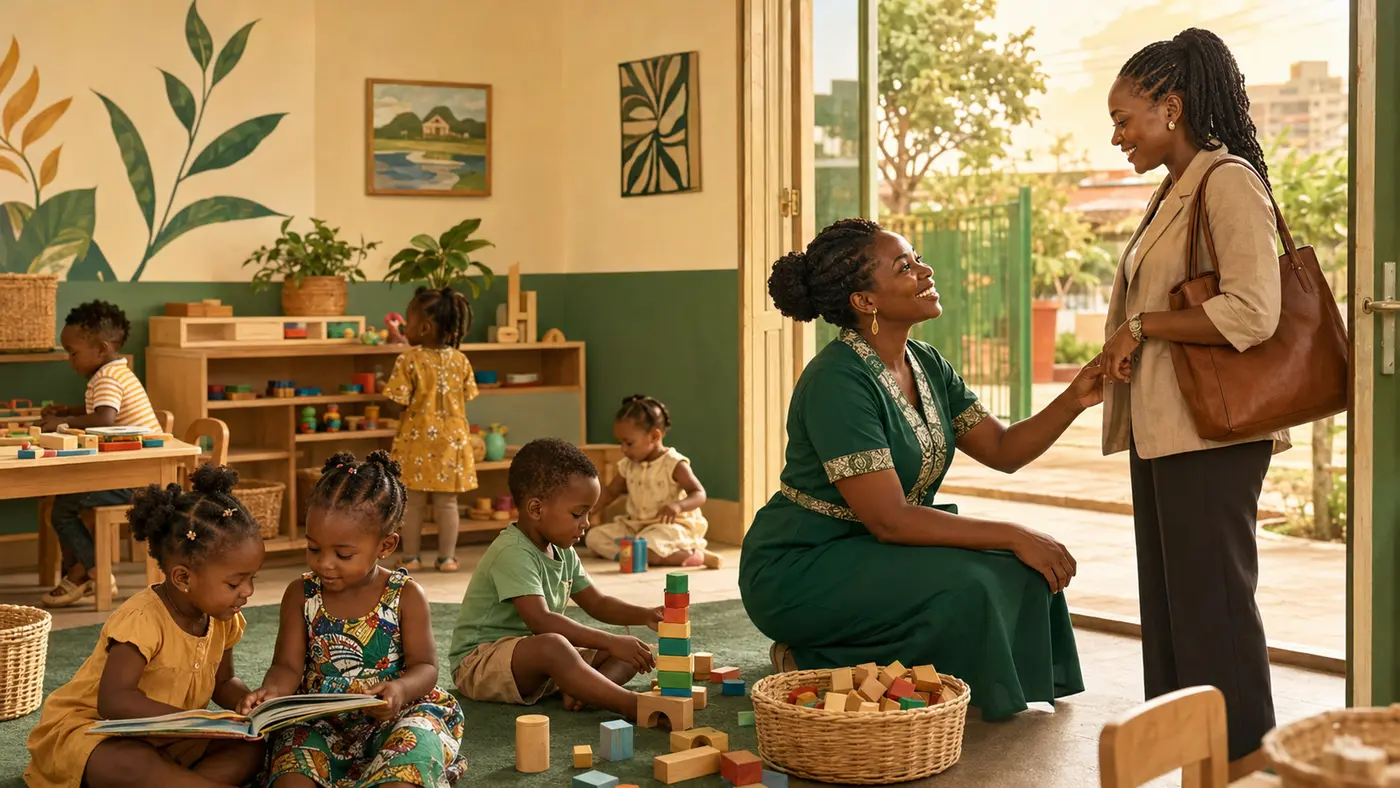
For many families in Douala, daycare is not merely a place where a child waits until an adult finishes work. It should provide safety, care, routine, play and age-appropriate interaction.
Young children benefit from predictable mealtimes, rest, movement, conversation and supervised play. These ordinary routines support language, confidence, cooperation and growing independence.
Parents also need clear communication. A daycare should explain opening arrangements, what a child needs each day, how concerns are handled and how families receive updates.
KidzHub will remain the daycare identity while the nursery and primary school develops under the Special Gems name. Keeping the roles clear helps families understand the service they are choosing.
The best daycare relationship is a partnership: caregivers learn about the child from the family, and families receive respectful information about the child’s day and development.
A dependable daycare begins with safe arrival and collection. Families should know who may bring or collect the child, how identity is confirmed and what happens when an authorised adult is delayed. Staff need an attendance record and current emergency contacts. Young children can move quickly and may not communicate danger clearly, so doors, gates, play areas and transitions require active supervision. Safety is not only equipment; it is a set of routines that every caregiver follows consistently.
Daily care should respect the child’s age and family information. Caregivers need to understand feeding arrangements, allergies, toileting, rest patterns, comfort items and any health instruction that the service is qualified to follow. Parents should receive a clear list of what to bring and how items are labelled. When a child is unwell, the centre needs a policy for contacting the family, separating the child safely and deciding when attendance should pause. Informal decisions made under pressure create avoidable conflict.
Purposeful play does not require primary-school worksheets for toddlers. Building blocks, songs, picture books, movement, sorting objects, pretend play and conversation develop language, coordination, attention and social understanding. Caregivers can extend learning by naming what the child is doing, adding a new word, asking a simple question and allowing time to respond. The programme should include active and quiet periods, indoor and outdoor opportunities where safe, and repetition that helps young children master familiar routines.
Transitions into daycare often need patience. A child may cry, refuse food or cling to a parent during the first days. Families and caregivers can agree on a short, calm goodbye routine and exchange information about what comforts the child. Secretly leaving may increase fear, while a very long goodbye can make separation harder. Staff should observe whether distress reduces over time and communicate honestly. Persistent or intense difficulties deserve a review rather than blaming the child or parent.
The relationship becomes stronger when communication is regular but manageable. A brief daily update may cover meals, rest, mood and one activity; significant incidents should be explained directly and documented. Parents also need periodic information about growing independence, language and participation without turning daycare into formal grading. KidzHub’s value will depend on what families experience every day: responsive care, organised routines, honest updates and a child who is increasingly secure in the environment.
Families considering KidzHub should be invited to ask practical questions and see how routines work. What happens at arrival, mealtime, rest, play and collection? How are caregivers supervised? How are accidents and concerns communicated? Clear answers help parents judge fit and help the daycare improve its own systems. Trust is built when the service explains both what it offers and the limits of what it can responsibly provide for each child. A dependable routine should remain visible even on an unusually busy day.
← Back to all articles