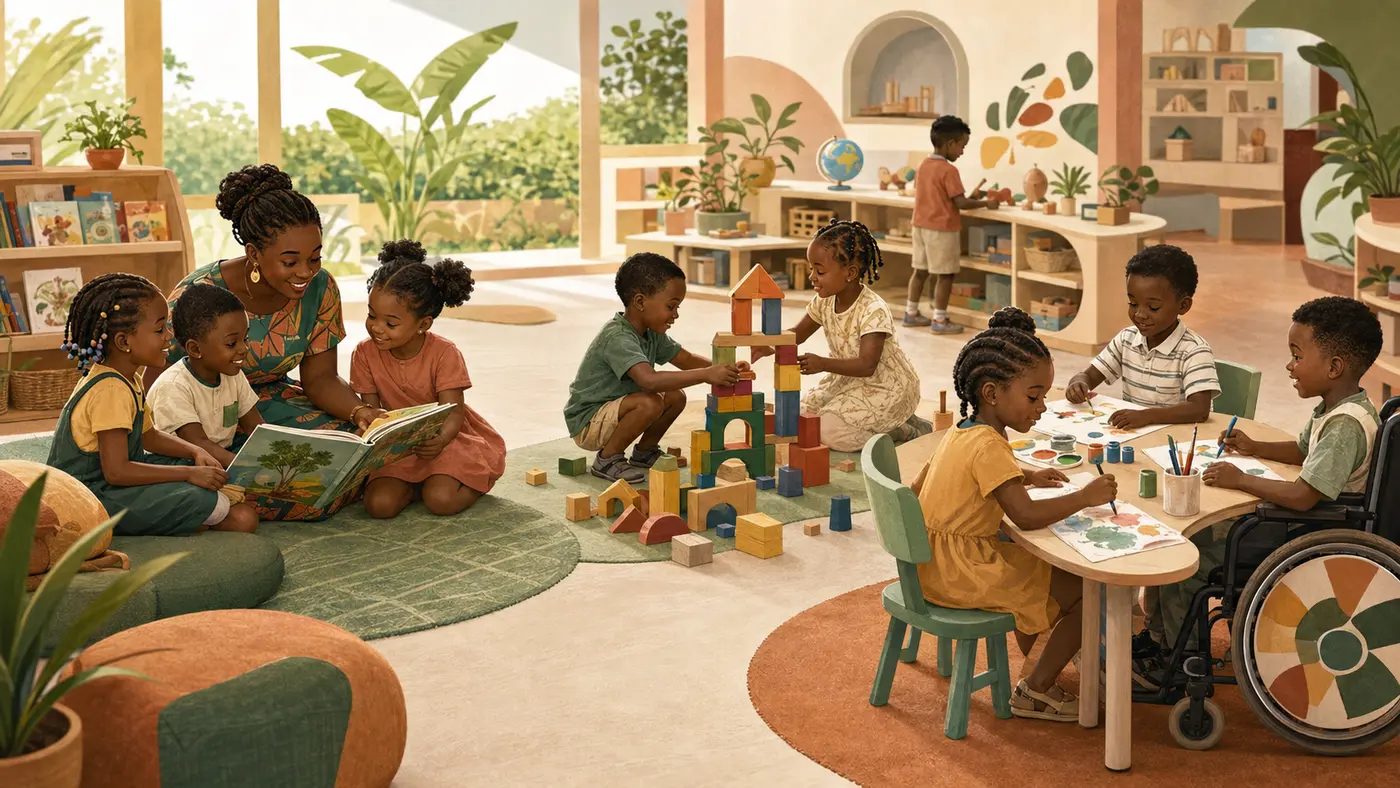
Special Gems English Nursery and Primary School is the future school identity being developed around a simple conviction: children should feel that they belong in the learning environment.
Inclusion is more than admitting children with different needs. It means planning routines, communication, classroom activities and support so that more learners can participate meaningfully.
A strong inclusive school still expects progress. Teachers observe carefully, set suitable goals, provide different forms of support and communicate honestly with families about what a child can do next.
The environment should work for children who are developing typically as well as those who may need additional help with communication, attention, movement, behaviour or academic learning.
Special Gems is a developing vision, not a promise that every need can already be served. Growth will depend on trained people, responsible systems and close cooperation with families.
The school vision should translate inclusion into decisions that families and staff can observe. Admissions conversations need to explore the learner’s strengths, communication, independence, health and support needs without making a diagnosis or promising that every need can be accommodated immediately. The school should explain its current capacity, class arrangements and any additional service or assessment that may be required. Honest placement decisions protect the child, other learners and staff while allowing the school to expand responsibly.
Classroom design can support participation through clear pathways, organised materials, reduced visual clutter, predictable routines and spaces for focused work. These features do not require a clinical environment. A warm nursery or primary classroom can remain colourful and lively while helping learners understand where to sit, collect materials, finish work and ask for a break. Teachers should watch how the room affects movement, attention and communication rather than assuming the same arrangement works for every group.
Inclusive teaching also requires planning beyond one support teacher. The class teacher should use clear modelling, multiple examples, visual support, guided practice and suitable response options as part of ordinary instruction. Additional adults need defined roles so they do not complete every task for one child or isolate the learner from peers. Support should increase access and gradually build independence. Progress may involve academic skills, communication, participation, self-regulation and daily routines, depending on the agreed priorities.
Families deserve a respectful review process. Regular discussion should identify what the child now does independently, which strategies work, what remains difficult and the next realistic goal. Reports should use plain language and observable evidence. Comparisons with siblings or classmates rarely help. The school can celebrate meaningful individual progress while maintaining age-appropriate expectations and seeking specialist advice when a learner’s needs exceed classroom knowledge or available resources.
As Special Gems develops, staff training and safeguarding should grow with enrolment. Recruitment must consider both subject knowledge and attitudes towards children who learn differently. Policies should cover communication, behaviour support, personal care where applicable, medication, emergencies, complaints and confidential records. Inclusion cannot rest entirely on the goodwill of one founder or one experienced teacher. It becomes sustainable when values are supported by routines, documentation, supervision and a team willing to keep learning.
The strongest evidence for the Special Gems vision will not be the word inclusive on a signboard. It will be a child who can enter safely, understand the routine, participate in learning, receive suitable challenge and be treated with dignity. Families should see honest communication and teachers should receive practical support. Building that environment will take time, resources and correction. Naming the vision publicly creates a responsibility to turn it into observable practice step by step. Each new promise should be matched by staff capacity, a documented process and evidence that the child is genuinely benefiting.
← Back to all articles